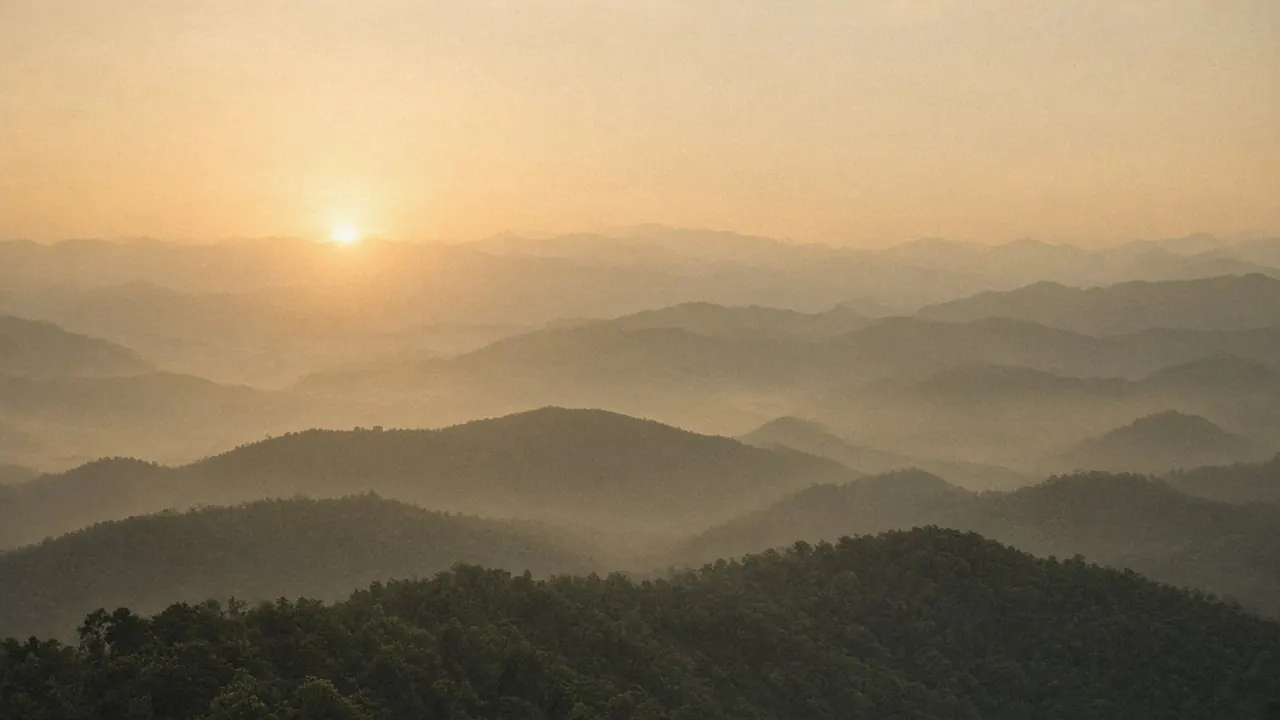
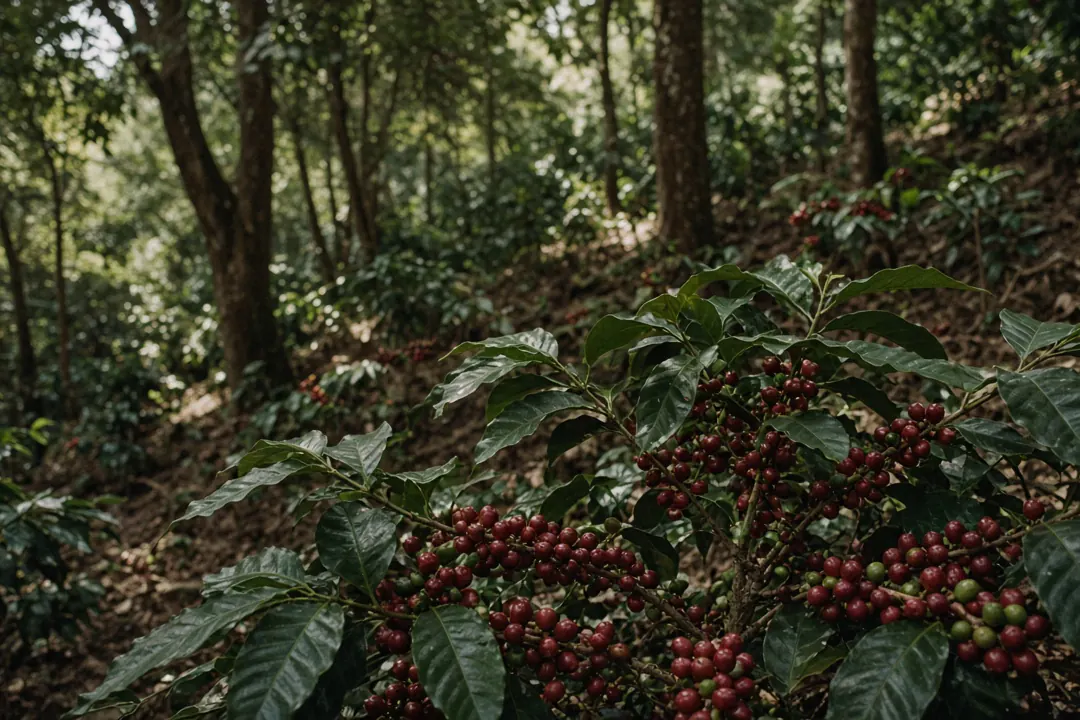
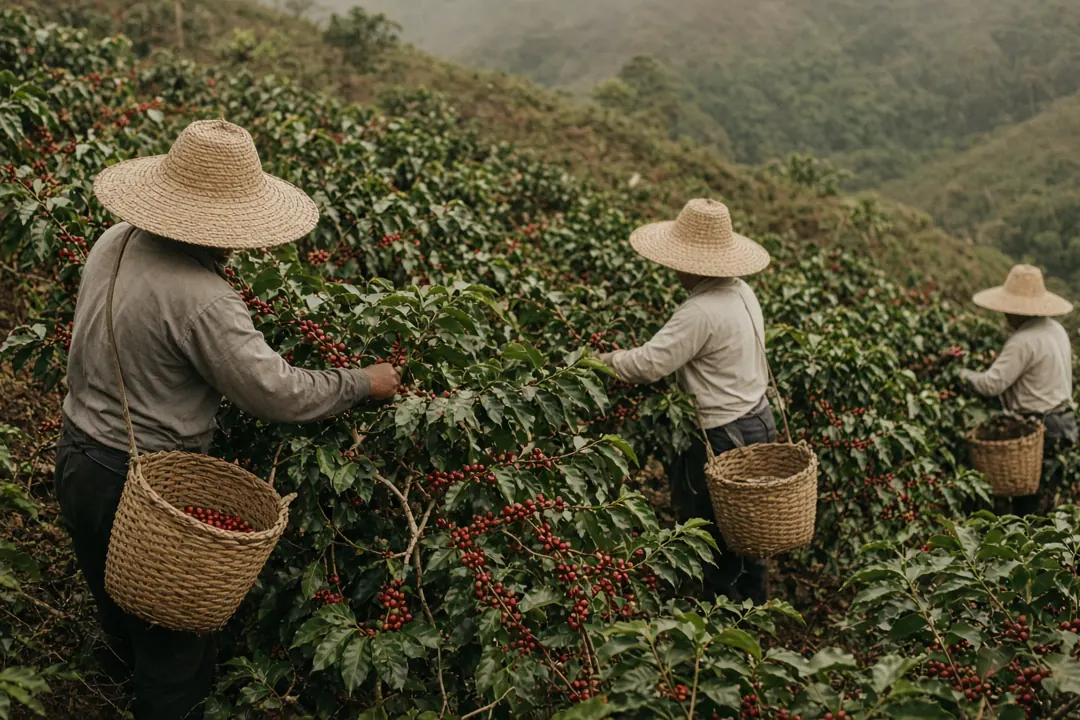
Coffee came to these hills as a replacement crop for opium. Today Chiang Rai is known for highland arabica, much of it grown by Akha, Lahu, Lisu and other hill communities.
Doi Chaang
Wawee subdistrict, Mae Suai district · 1,100–1,700 m
- Arabica, mainly the Caturra, Catimor and Catuai varieties, grown on the slopes of Doi Chaang mountain.
- In 1969 hill-tribe farmers here were encouraged to grow winter crops instead of opium under King Bhumibol's (Rama IX) initiative. Arabica was one of those crops.
- Grown by Akha, Lisu and Chinese families in the village, under the shade of fruit and nut trees such as plum, peach, pear and macadamia.
- “Kafae Doi Chaang” is registered as a Protected Geographical Indication (PGI) in the EU (2015).
Sources: EU Official Journal, Doi Chaang Coffee
Doi Tung
Mae Fah Luang & Mae Sai districts · 800–1,200 m
- Started in 1988 as part of the Doi Tung Development Project, begun by the Princess Mother and run by the Mae Fah Luang Foundation under Royal Patronage. The goal was to help residents switch from opium poppy to coffee.
- Arabica (Catimor, Caturra and Catuai hybrids) grown under natural forest shade on the Nang Non mountain range.
- Cherries are sorted and then processed using the washed method at a facility designated by the Foundation.
- The project area is home to Akha, Lahu, Shan, Tai Lue, Lua and Yunnanese communities. UNODC recognised the project in 2001.
Sources: EU Official Journal, Japan GI register, DoiTung
Wawee
Mae Suai district · 823–1,204 m
- A mountainous subdistrict first settled by Lahu (Muser) and Lisu people. Yao, Karen, Akha and Chin Ho families settled there later.
- Supported by the Royal Project Foundation and the Highland Research and Development Institute (HRDI). Coffee is one of the area's main crops, alongside tea, lychee and macadamia.
- Doi Chaang mountain lies within Wawee subdistrict.
Sources: HRDI, EU Official Journal
The hill-tribe farms
Akha, Lahu, Lisu and other highland communities
- Starting in the 1970s, Royal Project crop-replacement schemes introduced coffee, avocado and macadamia to upland communities that had grown opium and practised swidden (rotational) farming.
- Coffee plantations on Doi Tung cover about 15 km². Around 900 families earn a living from them.
Sources: Critical Asian Studies (2025), CNA
Full source list in SOURCES.md. Altitudes are the ranges given in the official geographical-indication specifications (Doi Chaang, Doi Tung) and by HRDI (Wawee).